Mont Blanc & Mountaineering
In 1741, two English travelers, William Windham and Richard Pocock, explored the glaciers of Chamonix.
They turned their experience into an account that spread throughout Europe.
The Alps became a tourist attraction.
A few years later, the Genevan scientist Horace Bénédicte de Saussure, fascinated by these peaks, offered a reward to anyone who could find the route to Mont Blanc.
On August 8, 1786, Jacques Balmat and Dr. Michel-Gabriel Paccard, both from Chamonix, reached the roof of Europe for the first time. They became heroes and invented “mountaineering”!
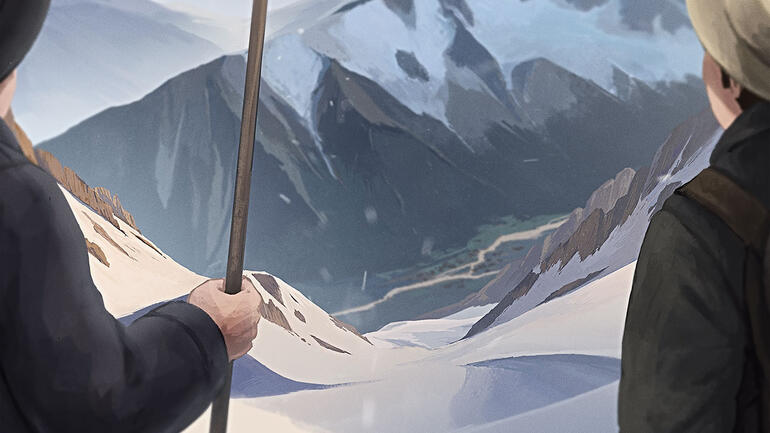
In the early 19th century, Marie Paradis became the first woman to reach the summit.
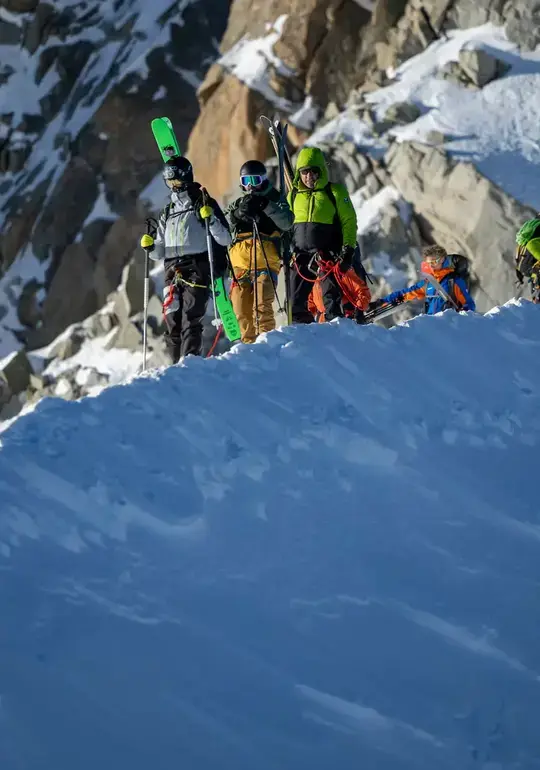
In 1821, the Chamonix Guides’ Association was founded: it is the oldest and largest guides’ association in the world.
The 1860s marked the golden age of mountaineering: the highest peaks were conquered via their standard routes. The climbing party led by Michel Croz and his client Edward Whymper symbolized this prosperous era.
In the 1920s, thanks to his exceptional technique, the Chamonix guide Armand Charlet ushered mountaineering into a new era.
Mountaineering became a matter of perspective and aesthetics.
In 1941, all of France read *Premier de cordée*, written by Roger Frison-Roche, one of the first non-Chamonix natives admitted to the Chamonix Guides’ Association.
City dwellers such as Gaston Rébuffat, Lionel Terray, and Louis Lachenal became the greatest guides of their time. They took part in the successful French expedition to Annapurna in 1950. It was the first 8,000-meter peak!
The accident that claimed the lives of the “Vincendon-Henry” rope team set a precedent for how mountain rescues are managed. Following this tragedy, rescues would be handled by a team of professionals, the PGHM (High Mountain Gendarmerie Unit).
In 1985, Sylvianne Tavernier became the first woman to join the Chamonix Guides’ Association.
In this valley, the mountains are a place of freedom, where stories and records continue to be made. Mountaineering is reinventing itself, striving to be more accessible so that everyone can live out their dream.
Latest articles Our Inspirations

Events You Won't Want to Miss This Fall

The Top 3 Activities to Try as a Family This Fall

Frankenstein on the Mer de Glace

The Incredible Story of Jacques Balmat's Alpine Stick

The New Mont Blanc Museum in Chamonix

"Alpine portraits" webserie
The One and Only Cie des Guides de Chamonix